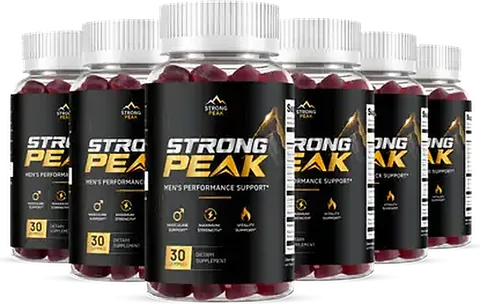
Habits stick when they are easy, visible and forgiving. Use a clear cue, remove friction, write if-then plans for hard days, and adopt a restart rule for slips. A gummy like Strong Peak™ helps because there is nothing to mix or measure. Follow the serving directions printed on the bottle label each day.
The week-three cliff · Make it visible, make it easy · Write if-then plans for tough days · The restart rule · Rewards, reviews and runway
- Make the habit visible and low-effort.
- Write if-then plans for the days that usually go sideways.
- Use a restart rule so one slip never becomes a quit.
The week-three cliff
Ask anyone who has started a morning run, a meal-prep Sunday or a new daily routine, and they will describe the same thing. Week one is exciting. Week two is fine. Week three is where life crowds in and the habit quietly vanishes.
The cause is rarely laziness. It is design. A habit built on enthusiasm collapses when enthusiasm fades, while a habit built on environment survives. Here is how to build the second kind, step by step, using ideas that work for almost any daily routine.
Make it visible, make it easy
Out of sight is out of mind. If your bottle lives in a bathroom cabinet behind other items, you will forget it. Put it where your eyes land during the cue: next to the coffee maker, on the desk beside your keyboard, on top of your gym bag.
Gummies help here because the effort is close to zero. Strong Peak™ is a gummy, so there is no scoop to find or glass to fill. Fewer steps mean fewer chances for the habit to break. Many people also find that a bottle in plain view works as a gentle visual reminder, a bit like a trail marker that quietly says you are on the right path.
Ready to start your routine?
Strong Peak: a daily men's performance gummy with a printed label and a 60-day money-back guarantee.
Order Strong Peak NowWrite if-then plans for tough days
Intentions are weak; plans are strong. An if-then plan pairs a specific trigger with a specific response, decided in advance while you are calm. It removes the decision from the moment when you are tired or rushed.
Write three that match the days that usually go wrong:
- If I leave home before breakfast, then I take my gummy with my first drink at work.
- If I am traveling, then the travel container goes in my bag the night before.
- If I wake up late, then I take it with my first meal, whatever time that is.
The restart rule
Every habit gets interrupted: a trip, a busy week, a cold. What matters is what happens next. Adopt a simple rule: never skip twice. One missed day is a blip. Two in a row starts a pattern.
When you do slip, skip the guilt and skip the catch-up too. Just return to the label's serving the next day, the way you would get back on a trail after a detour. Following the directions printed on the bottle label is always the plan. Our overview of how the daily routine fits together shows where the gummy sits in a normal day.
Rewards, reviews and runway
Pair the habit with a tiny reward: a favorite song, a stretch, a glance at your calendar. Small, immediate pleasures teach your brain that the routine is worth repeating. Add a monthly check-in too: when a bottle runs low, spend two minutes asking what worked, what was clumsy and what you would change, then adjust before the next one arrives.
Then give yourself runway. A habit needs time, and running out of product breaks it quickly. One bottle holds 30 gummies, a 30-day supply at the label's serving, so many people choose 3 or 6 bottles with free US shipping and a clear pricing breakdown. The 60-day money-back guarantee means you can test the routine fully.
For research on how long habits take, the PubMed database offers public studies you can browse. And if you want to see how the whole idea fits together, start with what Strong Peak is.